
Concrete Steps & Stairs
Safe, durable entryways that welcome visitors and withstand Michigan weather for decades.
Why Concrete Steps Make Sense
Your front steps create the first impression of your home. They also need to be safe and functional every single day. Cracked, settling, or deteriorating steps are dangerous and make your home look neglected. Quality concrete steps solve these problems and give you an entrance you can count on. They handle weather, foot traffic, and time better than wood or other materials.
Wood steps rot, metal steps rust, and both require constant maintenance. Concrete steps just sit there doing their job year after year. Our freeze-thaw cycles in Southfield, MI are brutal on outdoor structures. Concrete, when properly installed with the right mix and reinforcement, resists this damage better than alternatives. You get steps that stay solid and safe through decades of Michigan winters without major repairs or replacement.
Safety is critical for steps. Uneven treads, crumbling edges, or unstable structures create serious liability issues. People expect steps to be solid and predictable. When they are not, falls happen. Properly built concrete steps from our team provide uniform tread depth, adequate width, and stable support that keeps everyone safe. You avoid the worry and potential legal problems that come with dangerous steps.
Design Considerations for Concrete Steps
Step dimensions matter for both safety and comfort. Building codes specify minimum and maximum dimensions for good reason. Risers, the vertical part, should be between 4 and 7 inches high. Treads, where you step, should be at least 11 inches deep. All risers in a flight of stairs need to be the same height, and all treads the same depth. Inconsistent dimensions cause people to stumble. We follow code requirements and best practices to create steps that feel natural and safe to use.
Width depends on the location and how people will use the steps. Front entry steps should be at least 36 inches wide, but 48 inches or more is better. Wider steps feel more welcoming and allow two people to pass comfortably. Side or back entry steps can be narrower if they see less traffic. We help you determine appropriate width based on your home's style and how you use the entrance.
Railings and handrails are required by code when you have more than three steps. They provide stability and prevent falls. We can install embedded anchors in the concrete for railings during construction, which is much easier than trying to add them later. The type and style of railing affects the overall appearance, so we coordinate railing plans with the step design.
Features We Can Include
- Non-slip finishes for safety in wet conditions
- Integrated planters or seating walls
- Decorative stamping or coloring to match your home
- Landing areas for packages or greeting guests
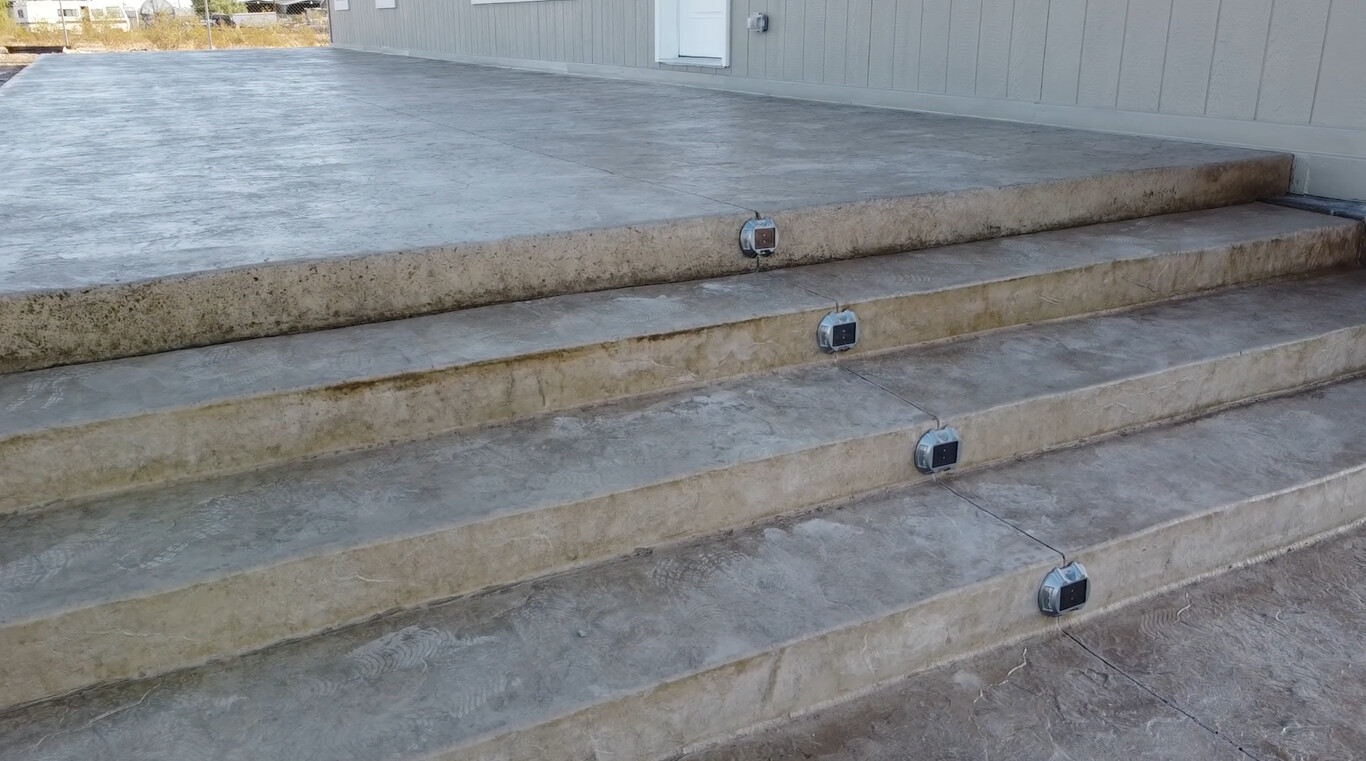
- Embedded lighting for nighttime safety and ambiance
- Custom shapes and curves for unique aesthetics
- Railings anchored properly during construction
Installation Process and Timeline
Building concrete steps starts with proper foundation work. We excavate to below the frost line and pour a footer that supports the entire structure. This prevents the steps from settling or heaving with freeze-thaw cycles. Shortcuts on the foundation guarantee problems later. We take the time to do this right because the foundation determines whether your steps last or fail.
Forming is the next critical step. We build precise forms that create the exact dimensions and shape you need. The forms hold the concrete in place while it cures and determine the final appearance. Quality forming work shows in the finished product. We use sturdy materials and take care to ensure everything is level, square, and properly supported.
Reinforcement gives concrete steps the strength to resist cracking and support loads. We install rebar arranged to handle the stresses steps experience. Proper reinforcement is especially important at corners and edges where cracks often start. We also make sure the steps tie into the structure they serve, whether that is your house foundation or a landing slab.
Concrete pouring and finishing requires skill and timing. We use appropriate concrete mix with air entrainment for freeze-thaw resistance. The finishing process creates the surface texture you want, from smooth to broomed to decorative. We also create a slight slope on treads so water drains off instead of pooling. If you want decorative treatments like stamping or coloring, those happen during finishing. The entire installation typically takes 2 to 3 days, and you can use the steps about a week after pouring. If you also need work on your walkways, we can coordinate both projects efficiently.